


LONDON - Scientists have recently reveal unique behaviors or habits of rodents. They find clever rodents such as rats digging , based on the expertise of its genetic , not from the learning process .
Reported by the BBC , Thursday ( 01/17/2013 ) , scientists are trying to unravel how the mice dig , which is controlled by genetic and not learned through the process repeatedly . Biological Sciences reveal efforts in defining how genes influence physical activity .
The researchers reported their findings in the journal Nature . They also studied the nature of the genetic offspring rats through and perform measurements on the rat hole that has been created .
Reportedly , this has implications for behavioral studies in some animals , including humans . Even modular genetic regions associated with particular parts of the rat hole .
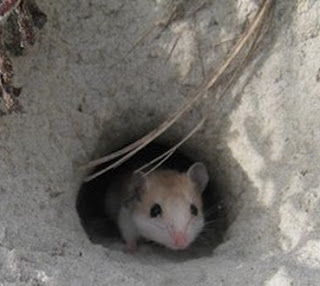 The study involved more than 300 mice ( Peromyscus polionotus ) which have habitats in the oil fields . These mice are known adept at making holes into the ground to the nest .
Not only build a nest , these mice also able to make a special line from the nest , which makes it able to get out easily when they are in danger . Type mice Peromyscus polionotus is a cross with a mouse - deer ( deer mice ) , which is a close relative species of Peromyscus maniculatus .
The team conducted the study with polyurethane foam injected into a rat hole to make it easy to measure . "One of the reasons that many studies have tried to find genes . These genes contribute to the failure of behavior . With this little trick , we at least minimize measurement errors , " says Hopi Hoekstra of Harvard University
Reported by the BBC , Thursday ( 01/17/2013 ) , scientists are trying to unravel how the mice dig , which is controlled by genetic and not learned through the process repeatedly . Biological Sciences reveal efforts in defining how genes influence physical activity .
The researchers reported their findings in the journal Nature . They also studied the nature of the genetic offspring rats through and perform measurements on the rat hole that has been created .
Reportedly , this has implications for behavioral studies in some animals , including humans . Even modular genetic regions associated with particular parts of the rat hole .
 The study involved more than 300 mice ( Peromyscus polionotus ) which have habitats in the oil fields . These mice are known adept at making holes into the ground to the nest .
Not only build a nest , these mice also able to make a special line from the nest , which makes it able to get out easily when they are in danger . Type mice Peromyscus polionotus is a cross with a mouse - deer ( deer mice ) , which is a close relative species of Peromyscus maniculatus .
The team conducted the study with polyurethane foam injected into a rat hole to make it easy to measure . "One of the reasons that many studies have tried to find genes . These genes contribute to the failure of behavior . With this little trick , we at least minimize measurement errors , " says Hopi Hoekstra of Harvard University


0 comments:
Post a Comment